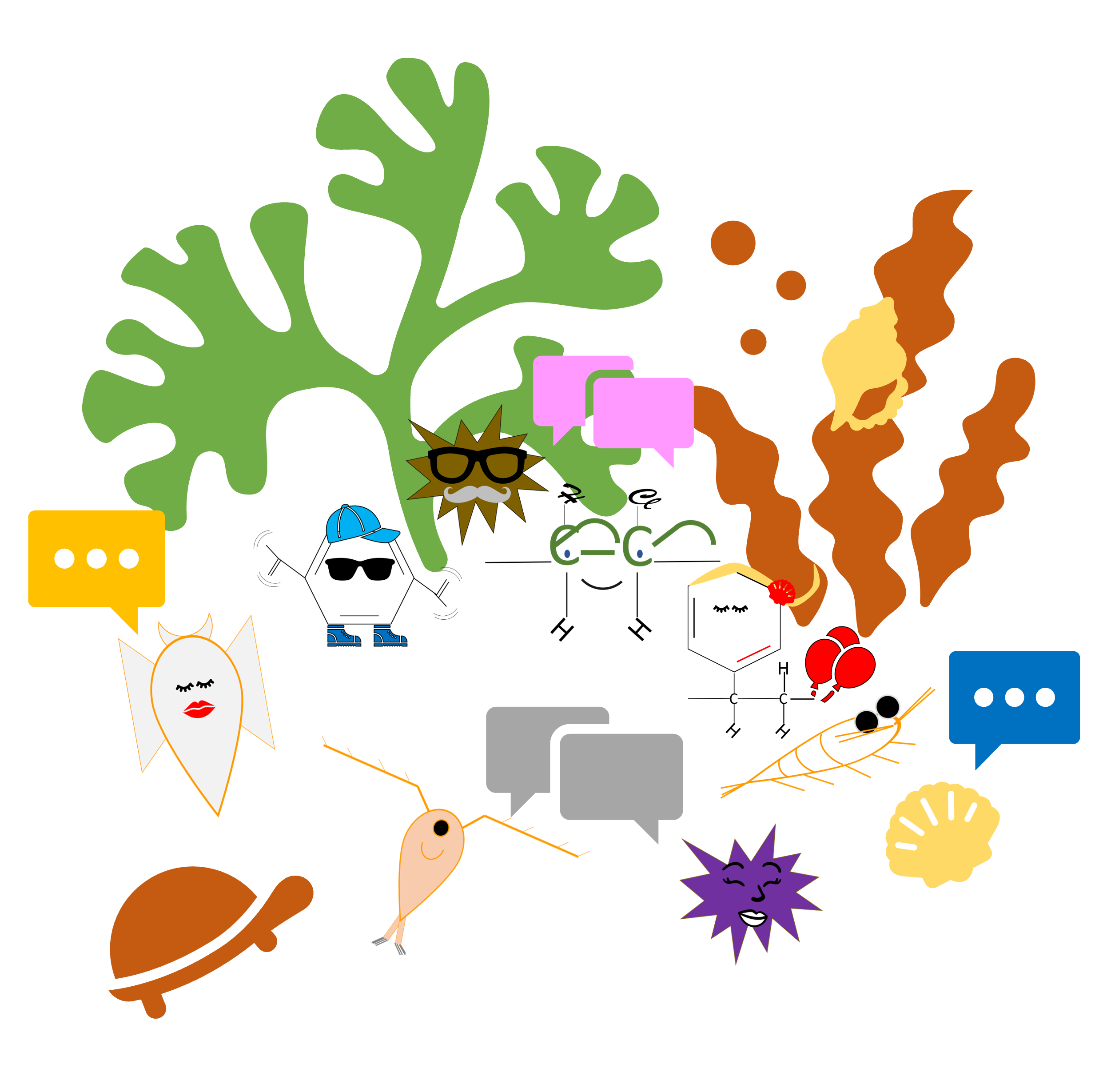
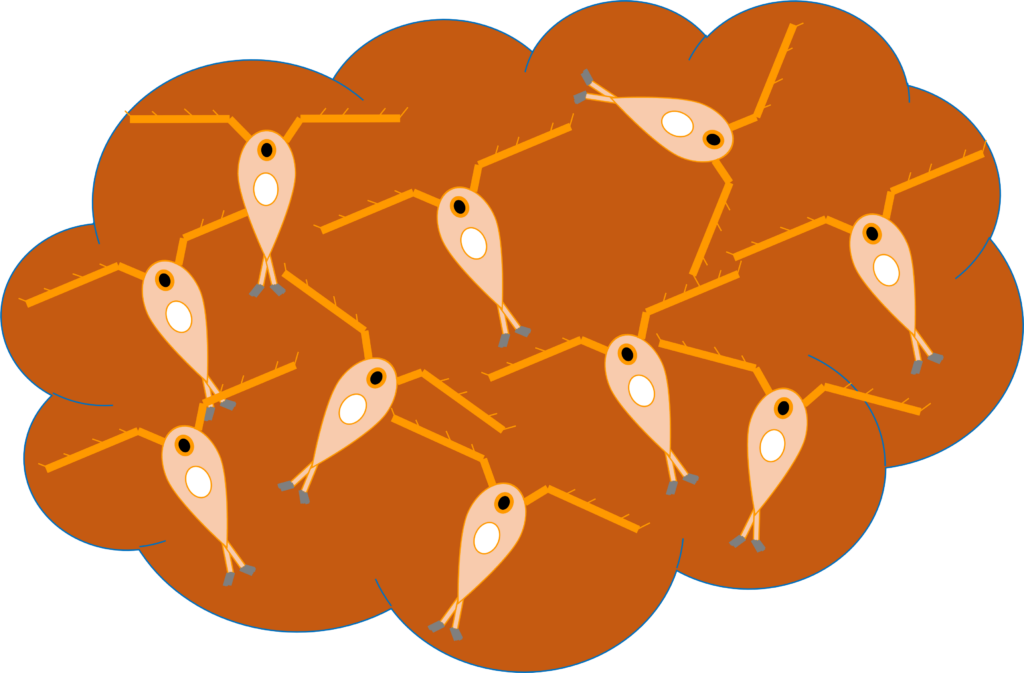
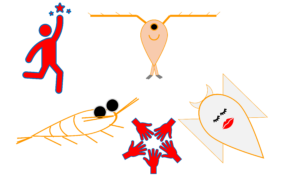
The villagers gathered around, still carrying the weight of what had happened. Urcino’s deal with the Strangers had shaken everyone. But Urcinetta had not stopped. She had gone from house to house, from current to current, listening. Asking. Collecting stories.
And what she found surprised her.
“Urcinetta,” said Mrs. Kelpina , a wise old kelp forest keeper, “my grandchildren play with PaScaline every afternoon after school. They say she is… nice.”
“Cl-oude always helps Copepito and Euphisto with their homework,” added Mr. Diatom , the village teacher. “He is the brightest student in the class.“
Clio sat quietly in the corner, her small heart aching. She felt a heavy weight in her chest. Guilt. Because the villagers were right — the Strangers were not all monsters. And Clio knew that better than anyone.
“You’re right,” Clio whispered, standing up slowly. “They’re not all bad guys.”
She thought of PaScaline, who had once stayed with her after school, sharing stories about a place where the sun was bright and she had once been a container for biological samples in hospitals – no water, no currents, just human buildings.
She thought of Cl-oude, who patiently explained numbers and shapes to Copepito until his eyes sparkled with understanding. He had once been a pipe for drinking water.
One day, as she swam near PaScaline’s home — a quiet corner of the village where the Strangers had settled — she heard a small, weak cry. She swam closer and found PaScaline’s child, a tiny polystyrene fragment, trembling in the water.
“Hey, PaScaline, what’s wrong?” Clio asked gently.PaScaline looked up, her usual smile gone. Her eyes were full of worry.
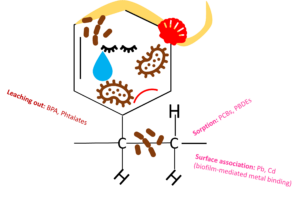
“Something in the water… it is binding to him. BPA and phthalates are leaching out of him as he ages. And PCBs, PBDEs, lead, and cadmium are all clinging to his skin from the water.”
“I used to be beautiful,” PaScaline said softly.
“I had a perfect shape. And now… look at me. I am degraded. Biofilms are eating my surface, little by little. I am being eaten by the very water I now live in.”
Clio’s eyes widened. She had never thought of it this way. The Strangers were not just hurting the sea creatures. The sea was hurting them in return.
“You never told anyone” Clio said, her voice full of sadness.
“We didn’t think you would care,” PaScaline replied. “You see us as enemies. As the ones who invaded your home.”
Clio swam closer and gently touched PaScaline‘s tiny hand.
“None of you chose this. You were made by humans, far away, and brought here by currents you could not control.”
Meanwhile, at the meeting….
Urcinetta stood tall at the center, her voice strong and clear.
“We must protect our home! The Strangers are poison. They are inside our food, our water, our bodies. We cannot let them stay!”
The villagers cheered. Copepito‘s dad nodded. Even Urcino looked thoughtful.
But then Clio raised her tiny hand.
“May I speak?” she asked.
The square fell silent. Everyone knew Clio. She was small, gentle, always the first to welcome someone new. Her voice carried a different kind of power.
“Urcinetta is right,” Clio began, looking straight at her friend. “The Strangers are dangerous. They carry toxins. They are changing our water. We must fight to protect our ocean.”
Urcinetta smiled, proud of her friend.
“But” Clio continued, her voice growing softer: “The Strangers are also suffering.”
A murmur rippled through the crowd.
“PaScaline’s child is sick. They came here by accident, carried by the same currents that bring us plankton. They used to live on land — in houses, in factories, and in labs. They were flushed into the oceans, and now they are being attacked by the very water they now live in.”
“I do not want Urcinetta to stop her battle. The ocean must be protected. But our enemies… are not the Strangers.”
The villagers sat in stunned silence. Even Urcinetta looked surprised.
“What do you suggest, Clio?” the mayor asked.
Clio took a deep breath. She had thought about this all night.
“Ask them where they come from. Ask them how they got here. And most importantly – ask them how we can help them get back home. Because if we send them home, safely, the ocean will be safer for all of us.”
A long silence followed. Then, slowly, the villagers began to nod.
Urcinetta looked at Clio, then at the crowd. Her eyes softened.
“Clio… you may be right,” she said. “We cannot fight what we do not understand. Maybe… maybe there is another way.”
And so, a new chapter began. Not a war, not a surrender — but a conversation. The villagers and the Strangers sat together, for the first time, and began to talk.
With a heavy heart, Urcinetta guided Hank through the dark waters, searching for a safe place where he could rest and recover. She remembered hearing about an old shipwreck covered in corals and seagrass – a peaceful sanctuary where weak and tired sea creatures could find shelter.
When they arrived, a kind loggerhead sea turtle named Nonna Livia welcomed them.
“Rest here, dear ones”
she said gently.
“Hank needs time to heal, and the ocean needs strong messengers like you.”
Urcinetta thanked her and promised to return. Then, without wasting another second, she set off toward the village of Clio & friends, where her uncle Urcino lived.
The journey was long and exhausting… But as she approached, something felt off.
The village, once lively and filled with the scents of fresh plankton and cold waters, now carried a warm, salty, and artificial smell. The water shimmered oddly, and tiny fragments of the Strangers drifted through the currents like dust in the wind.
When she finally reached Main Street, she saw them, PETer and his friends. The Strangers were everywhere. And standing beside them, smiling and shaking hands with PETer, was Urcino.
“Uncle!” Urcinetta gasped. “What’s going on?”
Urcino turned, surprised to see her.
“Ah, Urcinetta, my dear niece! You’ve returned just in time for our grand partnership!”
He gestured at PETer, who grinned with his gleaming plastic body.
“These fine gentlemen are our future. They are… progress.” Urcinetta’s stomach turned.
“Progress? Uncle, they are poisoning the ocean! They made Hank sick! They’re inside our food, our water… inside us!”
Urcino chuckled, waving a spine dismissively.
“Oh, my dear, you worry too much. We’ve adapted! We are survivors. The Strangers are here to stay, so why not make the best of it?”
The villagers, who once trusted Urcino, shifted uneasily.
They remembered Copepito’s dad’s warning. They had seen the Strangers creeping into their lives, but they hadn’t realized just how deep their influence had become. Urcinetta clenched her tiny appendages.
“No, Uncle. This isn’t survival. This is surrender.”
For the first time, doubt flickered in Urcino’s eyes. But PETer stepped forward, his voice as smooth as oil, and gestured in his uncanny language:
“Now, now, little creature” he purred. “Why fight what you cannot stop?”
Urcinetta stared at him, then at her uncle, and at the villagers. She had come to warn them, but now she realized she had to do more than that… She had to fight... And she would not be alone!
In the lower latitudes, where the concentration of marine plastic was the highest, the humans responsible for creating these artificial polymers began to raise alarm bells about its occurrence in the marine environment. They initiated scientific investigations and partnered with coastal communities worldwide to address the issue and remove these polymers from the oceans.
Urcinetta, Urcino’s niece, was studying in Italy as part of her Erasmus program. She was learning about many things, but the Strangers bothered her a lot, especially when she found them in her food.
While she enjoyed the delicious Italian food, she was not a fan of the new-style polymer-based cuisine.
One Friday evening, while enjoying an aperitivo with her friends, an accident occurred 😮 …
She was inadvertently pushed into a pile of abandoned fishing gear, and she got so scared that she fainted.
When she regained consciousness, she found herself on a small boat trapped in a tangle of nets. She felt really, really scared when she understood that humans had caught her.
She couldn’t handle it, and tears started pouring from her eyes. It was all too much, and she fainted again.
Trapped in the ghost fishing nets was a Mediterranean hake as well (Merluccius merluccius). This wise fish, Hank, quickly rescued Urcinetta.
Hey, hey, wake up!
Hank exclaimed, cautiously slapping her to avoid getting hurt by his spines.
Urcinetta opened her eyes and saw the large, old fish trying to help her.
Hi! she said. Where are we?
We’ve been mistakenly caught by these good guys who go cleaning the sea
Hank explained, pointing to the logo on the boat.
They were on the Abyss Cleanup boat. The skipper had no idea he had unexpected guests onboard and was heading back to shore.
Upon reaching the shore, the team submerged the nets back into the water for cleaning, allowing them to soak overnight.
As the night arrived, Urcinetta and Hank started feeling sleepy…
With the dawn of a new day, Urcinetta really wanted to be back home with her friends and family. But when she woke up, she saw that she was still stuck in the old fishing net with Hank, who was not feeling well. Hank, feeling weak, started sharing his amazing stories about the deep Cantabrian Sea. He talked about his friends, family, and how he had recently moved to the Mediterranean.
Sadly, he was very sick, and the doctor said he didn’t have much time left.
As Urcinetta and Hank were chatting, the Abyss Cleanup team came into the room and started untangling the nets. One team member spotted them at the bottom of the net and, taking a closer look at Hank, noticed something strange. Curious, he decided to investigate more. He put Urcinetta in a tank with sand and seawater and carefully examined Hank’s body.
The tests showed that Hank’s tissues had tiny pieces called microplastics. Not only that, but he had eaten other sea creatures like blue whiting and northern krill, and they also had microplastics in them. It was like the Strangers had affected Hank and his underwater friends.
Hank had become a victim of the Strangers and their tricky ways! 😢
Urcinetta and Hank looked at each other with concern and quickly swam back to the sea. They wanted to warn their underwater friends about the Strangers and the dangers they brought to their home!
In the small village, after the disappointing welcome party, everyone couldn’t stop thinking about Copepito’s dad’s words.
“My sister has made a shocking discovery,” he had said. “She has seen strange creatures floating in the water, and she found out that these creatures are made of something called ‘polymers’ – and they are produced by humans!”
Copepito’s dad exclaimed concerned.
The villagers were puzzled, and they all started reaching out to their relatives living in far-off places. What they found out was truly astonishing – the Strangers, as they came to be known, had invaded all the seas around the world!
Urcino, the wise old sea urchin who owned Good Foods on Main Street, called his cousins in the mid-Atlantic. They confirmed that they, too, were facing an invasion of polymers, which were now considered their main dietary food source.
Even his niece, studying in Italy, reported the presence of polymers in their daily meals. They were being offered inpasta and pizza, and chefs were including polymers in traditional desserts like cannoli siciliani, sfogliatelle, and baba’.
Urcino, being a shrewd business owner, saw an opportunity. He decided to strike a deal with Mr. PETer, who was known for his mysterious involvement with the polymers.
“You provide me with more of these polymer friends,” Urcino proposed, “and I will ensure your safety in this village. What do you say, my friend?”
Urcino said.
Mr. PETer, wearing a mischievous smile, agreed and shook Urcino’s hand. Little did they know that their partnership would lead to surprising adventures and discoveries as they embarked on a quest to understand the secrets of these polymer creatures and their impact on the marine world.
On that day, Clio swam up to one of the Strangers and introduced herself.
“Hi, I’m Clio! I was born here 2 years ago, and these are my friends Euphisto and Copepito.”
Clio gently said.
One of the Strangers, Mr. PETer, stepped forward and said,
“Hi, I am Mr. PETer. I come from very far away and I used to have another shape”
Clio was curious and asked,
“Why don’t you speak our language? Don’t you belong to the sea?”
Mr. PETer, looking at his friends, smiled and replied:
“No, we don’t belong to the sea. We are everywhere! We live in the air, in the water, in the sediments, on humans… We are a new species, and you and your family should become familiar with us because we are going to live with you for a long, long time!”
They always heard about the human being, but they never met anyone who was really close to them before.
Clio’s friends were worried, and they ran to tell their families. Copepito told his parents everything, and they immediately contacted their relatives around the world to make sure that these Strangers were not dangerous for the village.
While Copepito and Euphisto spread the word around, Clio thought it would be nice to have a welcome party for the Strangers, so she arranged an event in the main square.
“I know who you are, my sister from abroad told me you are invading their seas as well… what do you want from us?”
Upon hearing this statement, the crowd became alarmed and the mayor had to halt the gathering. Mr. PETer and his friends were asked to move away, but Copepito’s father continued to recount the entire story to people on the streets.
“Everyone, please listen carefully! There’s something happening in the Strait of Dover, where the Atlantic Ocean separates southern England from northern France. My sister, who works for a shipping company and monitors all the ships crossing the strait, has made a shocking discovery. She has seen strange creatures floating in the water and after doing some research, she found out that these creatures are made of something called “polymers” – and they are produced by humans! This means that these polymers are now in the water where sea creatures like us live, and we don’t know what kind of impact they will have on the healthiness of the water column. We need to pay attention and take action to protect our environment!
“Ohhh!!!” people gasped…
“We need to decide if we can live with these polymers, maybe even find a way to use them for good, or if we need to fight against them. It’s a very scary situation, and we need to make sure we’re doing our part to protect the sea and all its creatures”.
So, the village decided to work together to figure out if they could coexist with the Strangers or if they should fight against them. It was a big challenge, but they knew they could do it if they worked together.
Clio and her friends were happy to welcome their cousins from the Gulf Stream. They were excited to be reunited with their large family, even though they couldn’t explain how they made it to the cold Arctic. Probably due to the Atlantification of the Arctic Ocean?
The “good thing” for them was that the Arctic was not as cold as they expected, so, they cheered up.
The whole village arranged a big, themed party, with soft drinks, Mexican music and dance. The whole village arranged the big party to welcome them, but the wise men were still worried about the changes in the Arctic, like the unusual double bloom and the new entries.
Despite the skepticism of the wise men, Clio and her friends worked hard to make their cousins feel at home.
Over time, the cousins built their own homes, villages and fed on the fresh food. They took over the village, but the cohabitation reached a sort of equilibrium, despite some bullies who tried to set the rules.
However, the cousins of Clio, Copepito, and Euphisto were not the only new arrivals in the village.
Strange creatures started to emerge,
but these were not planktonic communities. They were polymers with different shapes and colors, and everyone was afraid of them except for Clio, Euphisto, and Copepito. They were curious to know more about them and where they came from.
Life in the Arctic was following its usual pattern, with the seasons marked by the shift from light to darkness. We find ourselves now in the warm season, where freshwater from melting ice and the predator/prey game can take place.
Clio, the sea angel, was the prettiest creature in the ocean, and her bright colors always cheered everyone up.
However, the elders of the village were worried about what they had seen during the past Winter…
… The weather outside was warmer than usual.
Some of Clio’s relatives in the eastern region of the ocean were trapped within the boundary layer (where the properties of the water were different from the rest of the ocean) due to the Atlantic water pushing forward.
Instead of snowing and freezing, it rained a lot, and the runoff from the coast occupied the surface layer with a detrital plume.
Copepito and his family were trapped in it for a long time during their swim.
The sea ice coverage became scarce and weak, and Euphysto’s family found very few algae to eat. Clio was very concerned for her friends and couldn’t wait for the summer to come, so she could go looking for them. Finally,
they were all reunited and they celebrated happily this together.
However, Euphysto’s family had lost some of their relatives while looking for food, but his grandpa had left him some stocks for the next months. Sweetheart!
Clio, Copepito, and Euphysto spent the whole summer together, as usual, but they knew something had changed. They realized the safety of their home had been affected by something, but they were young and carefree, so they didn’t worry too much about it.
As the fall approached, something strange happened. The ice didn’t overhang in the surface, and the light was still strong in the deep layers, causing a double bloom of algae. People were confused about this, and Clio’s mom asked if they were fresh since they were out of season. Many dieticians suggested not to eat them as they were non-organic, so the village decided not to feed on them.
But…
foreign people entered the Arctic, and they were starving from the past winter.
They were the far cousins of Copepito, Clio, and Euphysto, who used to live in the warmer and saltier waters of the tropics.
“New friends in the house, great!” said Clio, excited to welcome them.
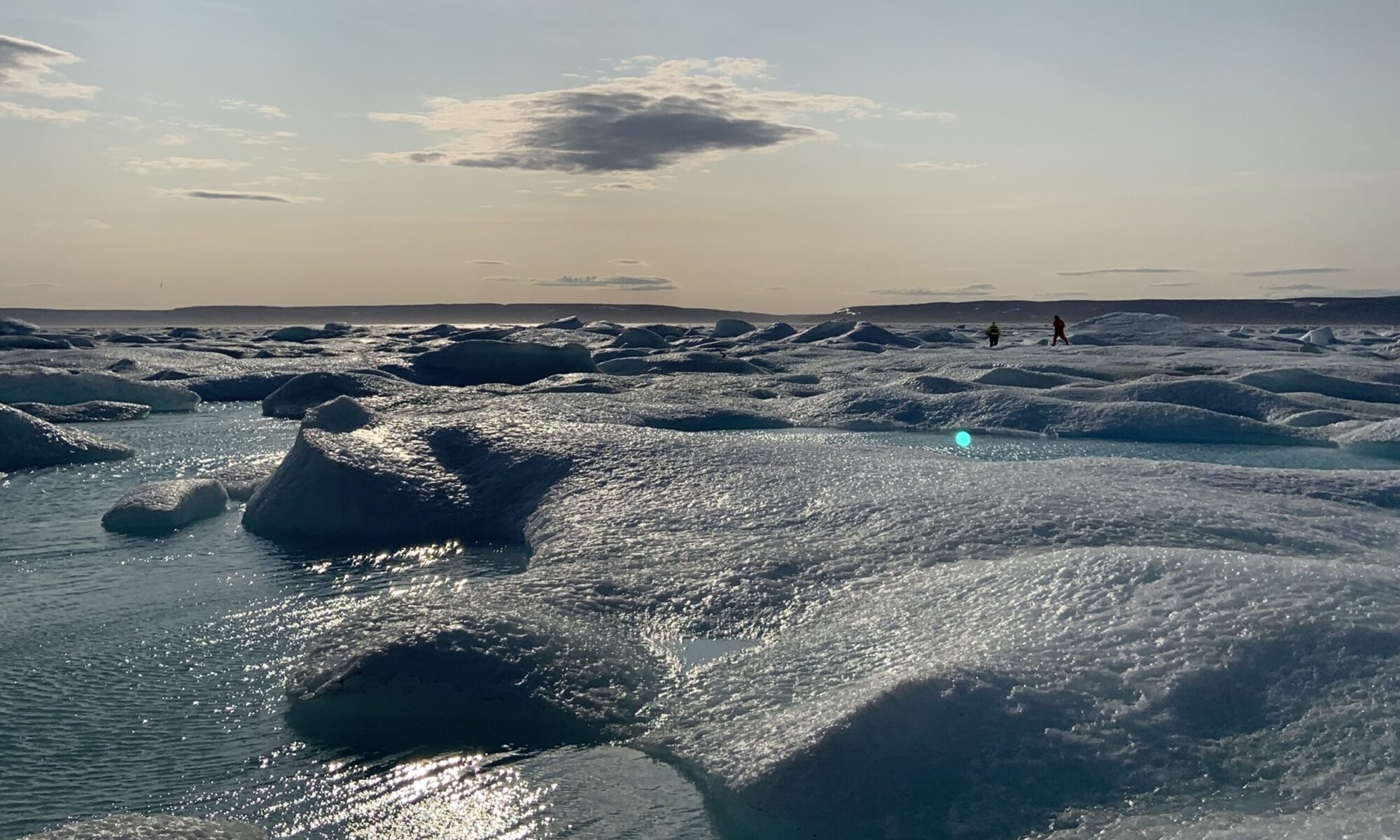
Once upon a time, there lived a group of friends named “Clio and her friends”. They lived in a quiet place far up North, in one of the big oceans surrounding our land, the Arctic Ocean.
The days here were very long, especially during the summer when the daylight lasted for almost six months and illuminated the photic zone. But in winter, darkness reigned and it was very cold all year round. However, Clio and her friends were happy living in such a cold and oligotrophic environment. They were adapted to this environment and the nearby waters helped to make things easier.
Despite being so far North, this place was not isolated. It was connected through two main straits, the the Fram and the Bering Straits, to the Atlantic and Pacific Oceans. This allowed Clio and her friends to receive food supplies from the currents coming from outside, which was important during times of starvation.
Their house was usually covered by sea ice, especially during winter, and was surrounded by tasty algae.
Euphysto, one of Clio’s friends, really liked these algae!
Clio and her friends lived within the water column. Some lived in the depths, some in the sub-surface, and some swam up and down looking for food.
During wintertime, when it was dark all around, some of Clio’s friends, such as Copepito and Euphysto, followed the moonlight as a comet to find food. The best time for our tiny friends was when the warm season arrived. The meltwater rose and supplied lots of nutrients, which meant that the grocery shop was finally OPEN!
As we wait for spring to arrive and enjoy the beauty of the flowers, Clio and her friends anxiously awaited the bloom of algae. Some of these algae were green, some were red, some were blue, and some were even luminescent.
The show was breathtaking!
When summer arrived, Clio and her friends welcomed the newborn and celebrated by swimming happily into the sea. However, midsummer was also a hunting season for them, and Clio was eager to feed!